 Law Office of Jason Ostendorf LLC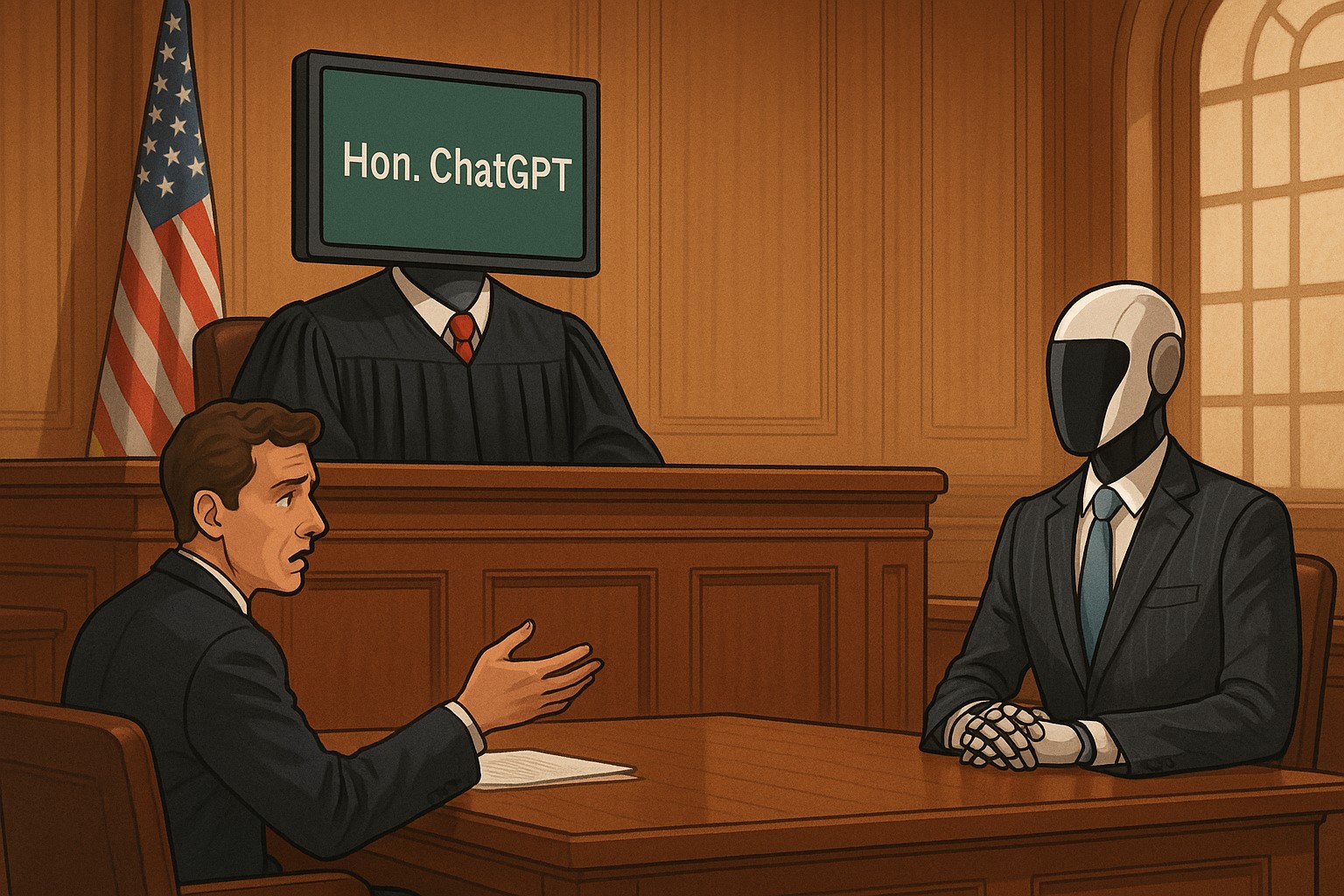
For generations, lawyers have offered clients the same uneasy reassurance: “It depends on the judge.”
That phrase has always been an admission—one we rarely say out loud—that trial-court outcomes often hinge less on law than on who happens to be wearing the robe that day. Discretion fills the gaps. Experience smooths the edges. Human judgment carries the weight.
But that era is ending.
Not because judges are failing. And not because artificial intelligence has “taken over” courtrooms. It’s ending because technology is exposing something uncomfortable: much of what we have long accepted as unavoidable judicial discretion is neither inevitable nor necessary.
Artificial intelligence is already capable of doing what trial courts claim only humans can do—and it is doing it with increasing consistency, transparency, and predictability.
This Isn’t an Attack on Judges—It’s an Acknowledgment of What’s Coming
If you’re a judge reading this, resist the urge to feel personally targeted. This is not a hit piece, and it is not a declaration of war on the judiciary.
It is simply an acknowledgment of something broader and unavoidable: no profession that depends primarily on information processing, pattern recognition, and rule application is insulated from artificial intelligence. Law is no exception—and neither is judging.
That observation is not an indictment of judges. In fact, it rests on the opposite premise. The very reason this conversation matters is because the best judges already strive for what AI excels at by design: consistency, fidelity to governing law, and decisions untethered from fatigue, emotion, or external pressure. Technology does not diminish that goal; it exposes how achievable it actually is.
Nor are lawyers immune. As artificial intelligence becomes better at evaluating transcripts, filings, statutes, and precedent, it will increasingly perform tasks that have traditionally justified human intermediaries. That reality is not a moral failing of the legal profession—it is the natural result of improved tools.
So this is not an attack on judges. It is an examination of how a legal system built around human limitation responds when those limitations no longer define the ceiling. In that sense, artificial intelligence is not hostile to the judiciary. It is a mirror—one that confirms where human judgment excels and exposes where inefficiency has long been mistaken for necessity.
Discretion Was Once Necessary. Now It’s Convenient.
Trial courts were built for a different world. A world of paper files, limited access to precedent, imperfect transcripts, and overburdened dockets. In that environment, discretion wasn’t just appropriate—it was essential.
Today, that justification no longer holds.
We now live in a legal system where every filing is digital, every statute searchable, and every appellate opinion instantly accessible. The informational constraints that once justified wide discretion have largely disappeared. What remains is habit.
And habit, when shielded from scrutiny, becomes power.
What Artificial Intelligence Can Already Do—Right Now
Even in its early stages, artificial intelligence has reached a level of legal reasoning that should make trial courts uneasy. When provided with a full trial transcript, party filings, and PDFs of the controlling statutes and case law, modern AI systems can accurately identify the governing legal standards, distinguish binding authority from non-controlling or inapplicable precedent, and apply law to fact with a level of logical consistency that rivals—and in some cases exceeds—the best human judges.
It can also do something many lawyers struggle to do: recognize when a cited case does not actually support the proposition for which it is offered. Stretched analogies, cherry-picked quotations, and borderline relevance are immediately exposed because the system evaluates entire decisions, not selective excerpts.
And this is before AI has true working-memory access to comprehensive state and federal legal libraries. Once statutes, regulations, and case law exist simultaneously in its active reasoning space, the gap between human legal reasoning and machine analysis will become not subtle, but glaring—raising an uncomfortable question about why judges, or even lawyers, should remain the primary bottleneck in reaching correct legal conclusions.
The Real Problem Isn’t AI. It’s Unchecked Discretion.
Trial-court decisions are rarely reversed—not because they are always correct, but because appellate courts defer. The abuse-of-discretion standard shields outcomes so long as the trial court says the right words on the record.
The result is a system where:
- identical facts can yield opposite rulings,
- reasoning can be thin but insulated, and
- unpredictability is excused as “judgment.”
Artificial intelligence does not eliminate discretion. But it exposes how much of it is unnecessary.
Once objective analysis can show how similarly situated cases should be resolved, unexplained deviation stops looking like wisdom and starts looking like arbitrariness.
Bias Doesn’t Require Bad Intent
No judge wakes up intending to be unfair. But humans carry context into the courtroom whether they want to or not—fatigue, frustration, sympathy, impatience, and subconscious assumptions all influence decision-making.
AI does not get tired. It does not reward familiarity. It does not punish tone. It does not rush because the docket is long or lunch is late.
That does not make AI morally superior. It makes it measurable.
And measurability is the enemy of unreviewable discretion.
Appeals Will Matter More, Not Less
Some assume that increased automation will diminish the role of appellate lawyers. The opposite is true.
As trial-level reasoning becomes easier to benchmark against objective analytical baselines, appellate review becomes sharper. Deviations become clearer. Inconsistencies become harder to explain away. The record matters more—not less.
This is especially true in areas like family law, custody, and civil litigation, where discretion dominates outcomes and meaningful appellate relief is often difficult to obtain.
Final Thought
For years, lawyers have told clients that winning or losing often depends on the judge.
That explanation is aging poorly.
Artificial intelligence is not threatening the justice system. It is threatening the idea that unpredictability is a virtue rather than a flaw. And that shift—quiet, technical, and unavoidable—has already begun.
Image Credit: OpenAI DALL·E.