 Law Office of Jason Ostendorf LLC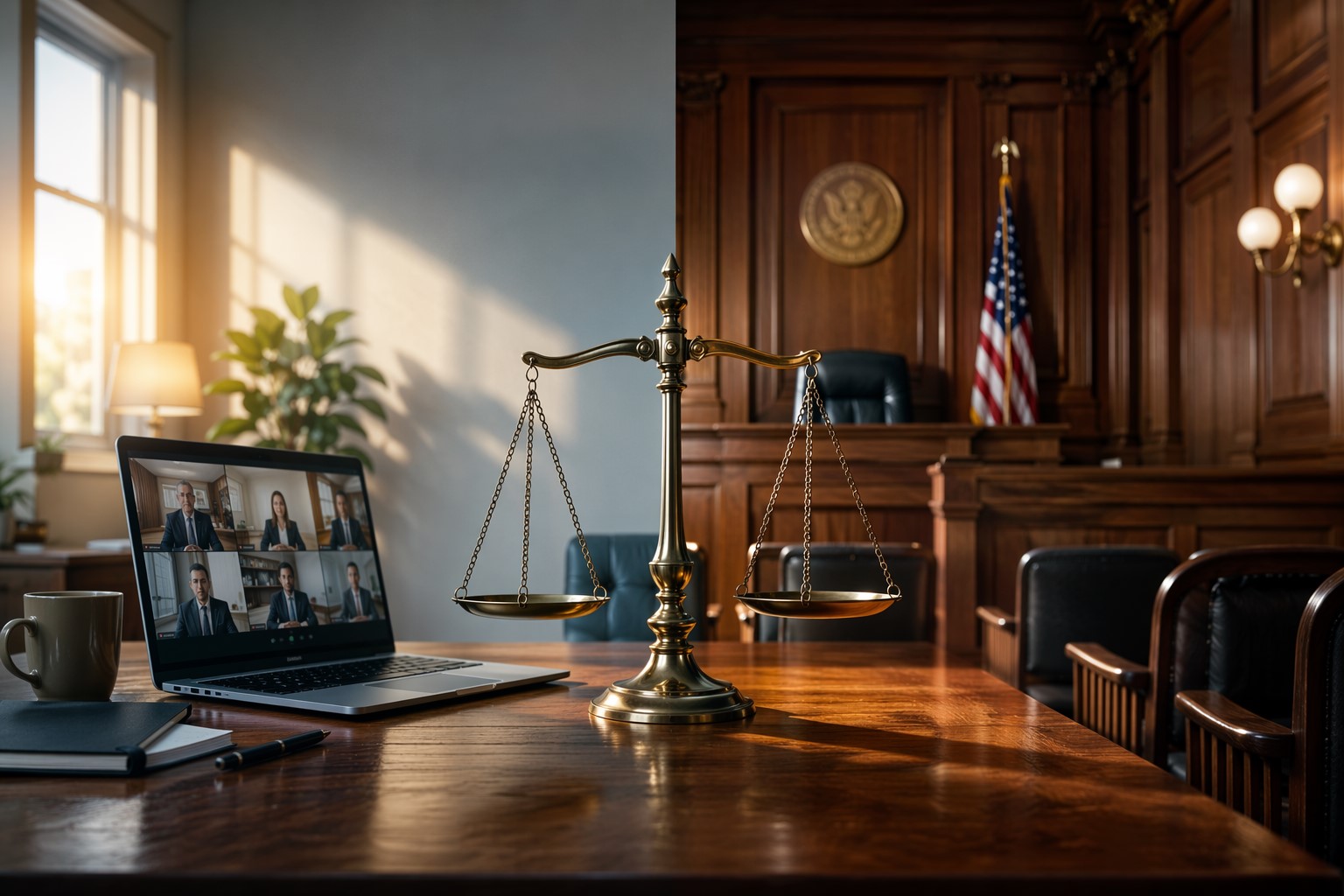
If you’ve never been involved in a court case before, one of the first assumptions is this: you’re going to have to take time off work, sit in a courtroom for hours, and wait for your case to be called.
That used to be true.
It’s no longer always the case.
Many Hearings Are Now Remote
Courts increasingly allow certain hearings to be conducted remotely—by Zoom or similar platforms—particularly where the hearing involves legal argument rather than live testimony.
These often include:
- Motions hearings
- Status conferences
- Scheduling matters
In those situations, you may be able to appear from your home or office rather than traveling to the courthouse.
Why This Matters for You
1. Lower Legal Costs
In-person hearings often involve more than just the time spent in front of the judge. There’s travel time, waiting time, and scheduling inefficiencies.
All of that adds up.
Remote hearings reduce or eliminate those inefficiencies, which can translate directly into lower legal fees.
2. Less Disruption to Your Schedule
Instead of blocking off half a day—or an entire day—you may only need to be available for a short, scheduled window.
That means:
- Less time away from work
- Less logistical stress
- More predictability
3. A More Efficient Process
Remote hearings tend to be more tightly managed. Judges can call cases more precisely, and there’s less downtime waiting in crowded courtrooms.
The result is a process that is often faster and more focused.
Will a Remote Hearing Hurt My Case?
In most situations, no.
If the hearing is based on legal argument rather than witness testimony, the judge is focused on the substance of the case—not where the attorney is physically located.
In fact, remote hearings often sharpen the focus on the legal issues, without the distractions that can come with in-person proceedings.
For matters involving appeals in Maryland courts, this is especially true. Appellate work is centered on legal analysis and written records, making it well-suited to remote proceedings.
When You Will Likely Need to Appear in Person
Not every case can—or should—be handled remotely.
You should expect to appear in person where:
- Witness testimony is required
- Credibility is a key issue
- A trial is being conducted
In those situations, being physically present allows the court to evaluate evidence and testimony in a way that remote proceedings may not fully replicate.
The Bottom Line
The court system is evolving.
While in-person hearings are still necessary in some cases, many routine proceedings can now be handled remotely—saving time, reducing cost, and making the process more manageable for clients.
If you’re involved in a case, one of the first things to evaluate is whether your hearing can be conducted remotely—and how that decision affects your time, your cost, and your overall strategy.
Image Credit: OpenAI DALL·E.