 Law Office of Jason Ostendorf LLC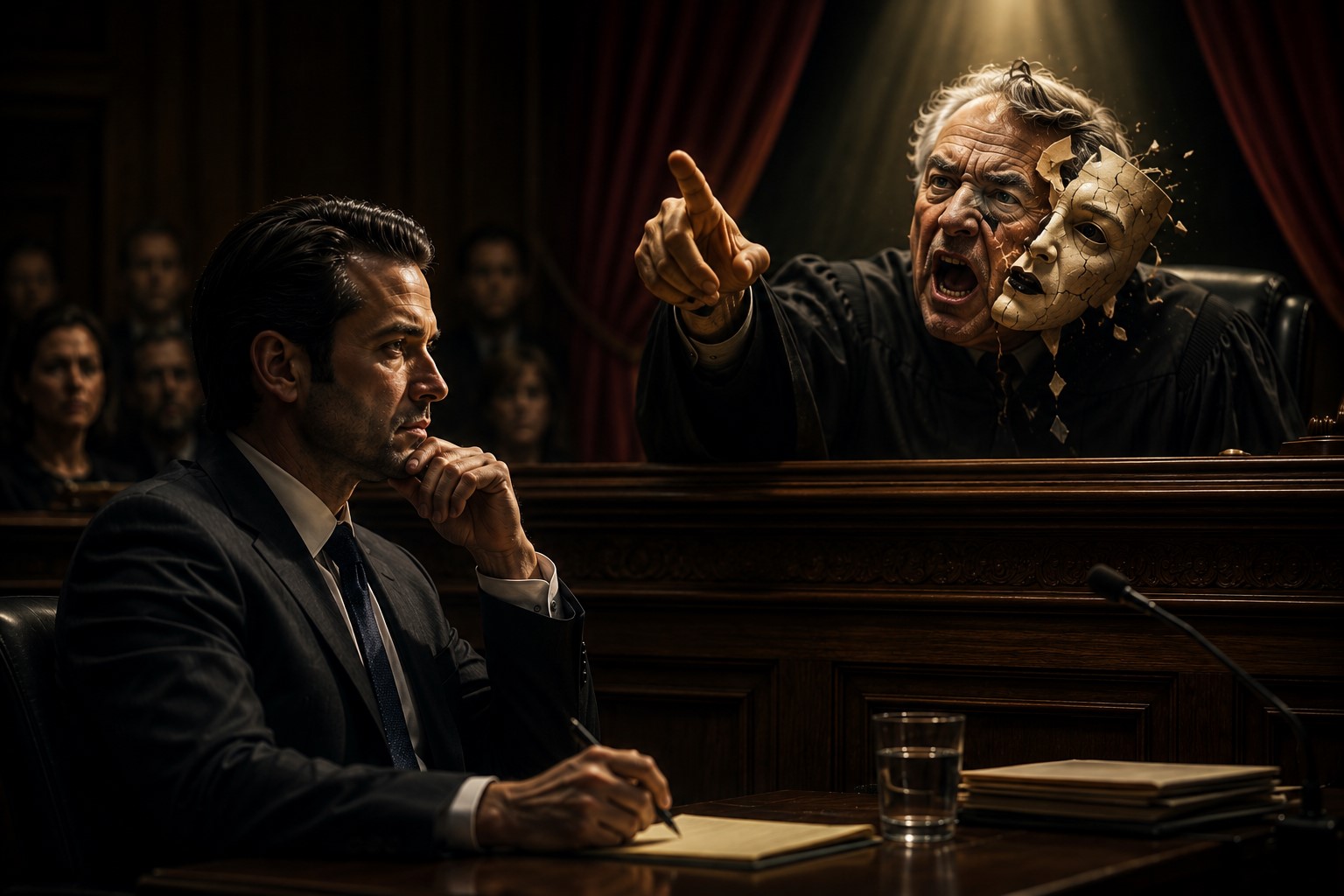
Every litigator eventually encounters one.
The hostile judge. The impatient judge. The judge who interrupts before you finish a sentence, rolls his eyes at your argument, lectures counsel from the bench, or speaks with such exaggerated certainty that anyone unfamiliar with the law would assume wisdom must be radiating from the robe itself.
Young lawyers often make the same mistake in these situations: they assume the exchange is still primarily about the law.
It often is not.
The judge is not the obstacle. The judge’s self-image is.
A hostile judge is usually not defending Issue X. He is defending the internal narrative that he is intelligent, fair, authoritative, and in control. The robe is theater. The certainty is armor. And once a lawyer understands that, the emotional temptation to “win” the confrontation starts looking childish.
Many lawyers walk into court believing judges are detached arbiters operating above ordinary human impulses. Experienced litigators know better. Judges are human beings. Human beings protect ego. Human beings react emotionally when challenged publicly. Human beings dislike appearing wrong in front of an audience.
The courtroom does not magically suspend human psychology simply because wood paneling and black robes are involved.
The Worst Mistake Lawyers Make
When confronted with a hostile judge, lawyers tend to fall into one of two traps.
The first is submission. The lawyer becomes visibly nervous, apologetic, timid, or deferential to the point of self-erasure. The judge senses it immediately and presses harder.
The second is emotional rebellion. The lawyer takes the hostility personally and begins fighting for emotional dominance rather than legal positioning. Tone sharpens. Body language changes. The lawyer starts trying to “teach the judge a lesson.”
That almost never ends well.
Courtrooms are not merely arenas of law. They are arenas of perception, hierarchy, identity management, and emotional control. A lawyer who forgets this may technically understand the law while catastrophically misunderstanding the room.
The lawyer who lashes out at a hostile judge often believes he is displaying courage. In reality, he is usually displaying emotional capture. The judge reached into his nervous system and started pulling wires.
Anger is often subconscious surrender.
The Dangerous Lawyer Is the Calm One
The truly dangerous lawyer is not the loud lawyer.
It is the lawyer who remains unnervingly composed while the judge becomes emotional.
The judge interrupts. The lawyer slows down.
The judge postures. The lawyer cites the record.
The judge attempts to socially dominate the courtroom. The lawyer calmly preserves the issue for appeal.
That composure matters because hostile judges often want participation in the performance. They want the lawyer intimidated, angry, flustered, defensive, rattled, submissive, or emotionally reactive.
The calm lawyer denies them that satisfaction entirely.
And ironically, that restraint often projects more confidence than open confrontation ever could.
Judges are accustomed to lawyers emotionally orbiting them. Seeking approval. Seeking validation. Seeking permission to speak. A lawyer who remains respectful while refusing psychological submission can become deeply unsettling to an insecure judge.
Especially if the lawyer is also correct.
Making the Record Without Joining the Performance
None of this means lawyers should become passive.
It means they should become strategic.
Sometimes the best response to a hostile judge is tactical framing:
Your Honor is correct that courts generally hold X, which is precisely why Smith becomes controlling here, because it addresses the exception currently before the Court.
That approach allows the judge to preserve self-image while simultaneously forcing engagement with the actual law.
Other times, preserving the issue cleanly is the better route:
Understood, Your Honor. For purposes of preserving the issue, the defense respectfully notes its objection and the basis previously stated.
That language is powerful because it refuses emotional participation while quietly building appellate protection into the transcript.
Experienced appellate lawyers understand something trial lawyers occasionally forget: records endure longer than performances.
The judge’s irritation is temporary. The hearing is temporary. The social tension is temporary. But transcripts, rulings, preserved objections, and appellate consequences may survive long after the courtroom theater has ended.
The Lawyer’s Real Objective
A lawyer standing before a hostile judge must ultimately decide what game he is playing.
If the goal is emotional victory, there are many ways to achieve it. Sarcasm. Escalation. Public defiance. Thinly veiled contempt.
But lawyers are not hired to win emotional confrontations.
They are hired to maximize outcomes for clients.
And that often requires understanding an uncomfortable truth:
A hostile judge is rarely asking, “Who is legally correct?”
More often, consciously or subconsciously, the judge is asking:
“Who is challenging my authority?”
The lawyer who understands that distinction gains an enormous strategic advantage. He stops treating the courtroom like a morality play and starts treating it like what it often is: a psychological environment governed by ego, perception, hierarchy, and consequence.
When dealing with a blatantly hostile judge, remember that it is theatre. The law is often no longer the real subject of the exchange. Ego is. Control is. Identity is. The biggest mistake a lawyer can make is forgetting that—and taking the judge seriously.
Image Credit: OpenAI DALL·E.