 Law Office of Jason Ostendorf LLC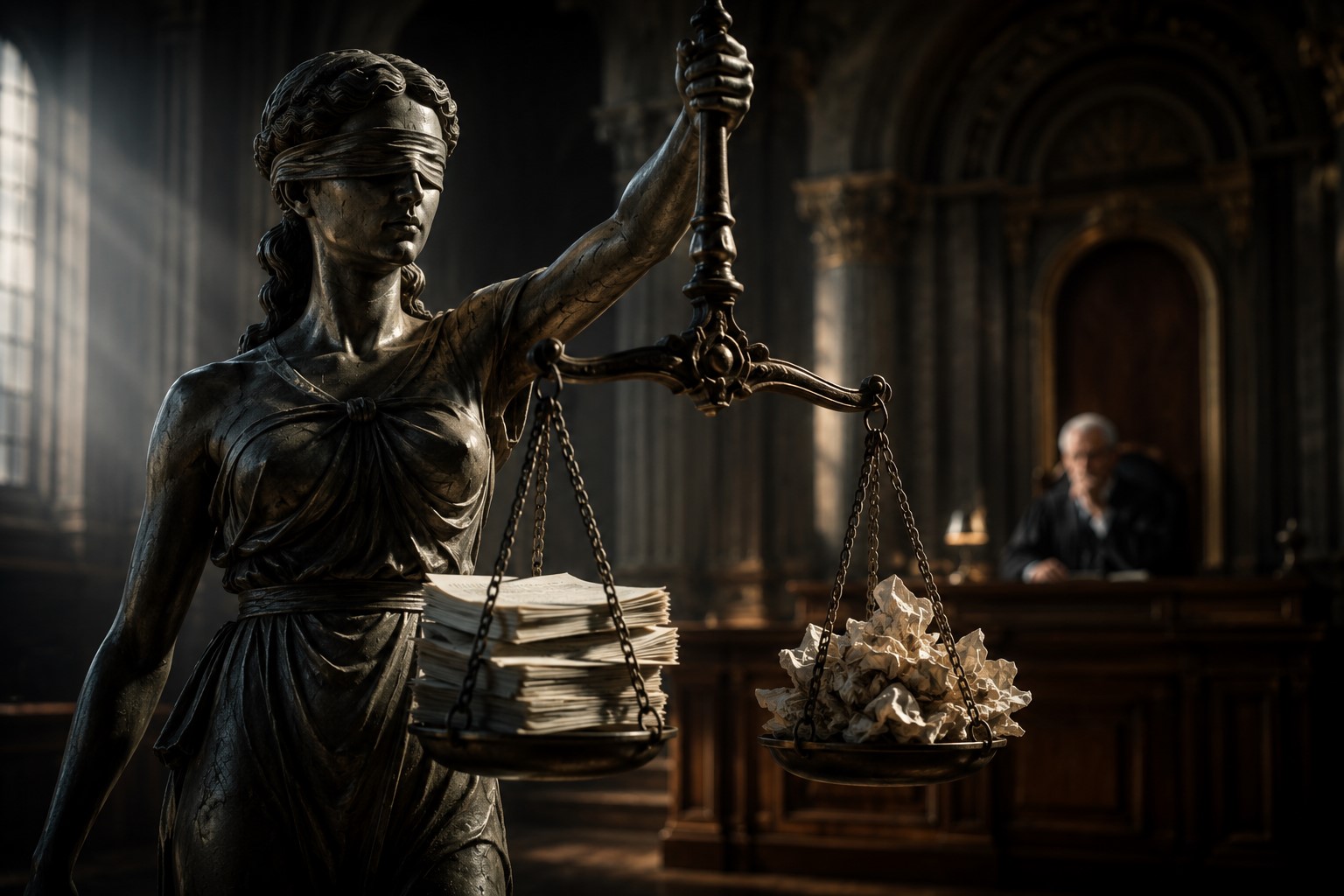
Most people enter the legal system believing courts exist primarily to determine what happened and reach the right result. That is not entirely wrong. But it is incomplete in a way that shocks many litigants the first time they encounter it.
Because much of modern litigation is not actually about truth. It is about procedure.
Deadlines. Jurisdiction. Preservation. Finality. Waiver. Technical compliance. Whether the correct document was filed at the correct time, in the correct court, after the correct order, using the correct procedural vehicle.
And if that sounds less like a search for justice and more like a ritual system designed to preserve itself, that is because sometimes it is.
The Public Thinks Courts Exist to Reach the Truth
The average person imagines a courtroom as a place where facts are examined, credibility is tested, and justice emerges through reason.
Reality is often stranger.
A person can lose without a court ever reaching the underlying merits of the dispute. Appeals can be dismissed because the wrong procedural step occurred at the wrong time. Legitimate grievances can evaporate because a filing was technically premature, technically late, or technically classified the wrong way.
This is not rare. It is foundational to how the system operates.
To lawyers and judges, these procedural rules are viewed as necessary guardrails that maintain order and predictability. And to be fair, many of them do serve important purposes. A legal system without procedural structure would collapse into chaos.
But there is another side to that reality—one lawyers discuss privately far more often than publicly:
The system can become so focused on procedural ritual that the underlying truth almost becomes secondary.
The Ritual Matters More Than the Reality
One of the clearest examples appears in appellate practice. Most non-lawyers assume an appeal asks a simple question: “Did the lower court get it right?”
But appellate litigation is often dominated by threshold procedural questions that have nothing to do with whether the underlying ruling was fair, accurate, or wise.
- Was there a final judgment?
- Was the issue preserved?
- Was the notice of appeal filed within the correct window?
- Was the order technically appealable?
If the answer to one of those questions is “no,” the merits may never be reached.
That is where law becomes something stranger than morality. It becomes classification.
The technical label placed on a proceeding, order, or deadline can determine whether a litigant gets review at all.
Rosales: When “Jurisdiction” Was Not Really Jurisdiction
Maryland’s appellate courts have recognized, at least in some contexts, that procedural labels can become more rigid than the rules themselves require.
In Rosales v. State, 463 Md. 552 (2019), the Supreme Court of Maryland addressed whether Maryland Rule 8-202—the rule requiring a notice of appeal to be filed within thirty days after final judgment—is truly jurisdictional. Historically, Maryland cases had often described that deadline as jurisdictional, meaning that an untimely notice of appeal would deprive the appellate court of authority to act.
The Court corrected that framing.
It held that Rule 8-202 is a claim-processing rule, not a jurisdictional limitation. That distinction matters. A jurisdictional defect is fatal and cannot be waived. A claim-processing rule remains mandatory, but it may be subject to waiver or forfeiture in appropriate circumstances.
That may sound technical. It is.
But it is also important.
The Court did not throw procedure out the window. It did not say deadlines do not matter. It said something more precise and more valuable: not every procedural violation should be inflated into a jurisdictional death sentence.
That is the difference between a court serving the rules and a court being ruled by them.
Carver: When a Premature Appeal Was Allowed to Live
A similar theme appears in Carver v. RBS Citizens, N.A., 462 Md. 626 (2019).
There, the issue was whether the Maryland Appellate Court improperly dismissed an appeal as premature. The notice of appeal had been filed before the entry of final judgment because unresolved cross-claims remained pending. The appellate court dismissed the appeal.
The Supreme Court of Maryland reversed that dismissal.
Relying on Maryland Rule 8-602(g)(1)(D), the Court exercised its discretion to treat the notice of appeal as if it had been filed on the same day as, but after, entry of the final judgment. The result: the appeal was allowed to proceed on the merits.
Again, the point is not that procedure did not matter. The point is that procedure was not treated as a mindless trap.
The Court looked at the procedural posture, recognized the available discretion, and chose a path that allowed appellate review rather than reflexive dismissal.
Procedure Is the Operating System of the Law
Lawyers sometimes describe procedure as the machinery beneath the legal system. That description is accurate, but incomplete.
Procedure is not merely part of the system. In many ways, it is the system.
A technically defective filing can matter more than compelling facts. An argument raised one stage too late can disappear forever. Entire cases can rise or fall based on whether a court believes it possesses authority to hear the matter at all.
That is deeply frustrating to many litigants because human beings instinctively believe substance should override technicality.
Courts often believe the opposite: that procedural consistency is what protects legitimacy in the first place.
And this is where the legal system begins to resemble something almost theatrical.
Judges, lawyers, litigants, and clerks all operate within highly structured roles governed by ritualized language and ritualized procedure. Everyone performs within the architecture of the system because the system depends upon those rituals being treated as real and binding.
But the best procedural decisions recognize the difference between structure and worship.
Rules should organize justice. They should not become a substitute for it.
The Dangerous Power of Labels
One of the most underrated forces in law is the label.
Call something jurisdictional, and suddenly it sounds untouchable. Call something appellate, and suddenly review may narrow. Call something final, non-final, interlocutory, premature, waived, preserved, original, limited, special, statutory, or collateral, and the entire path of a case may change.
The label becomes the gate.
That is not always wrong. Legal categories matter. Without them, courts would have no coherent way to decide what they can and cannot do.
But categories can also become intellectual shortcuts. They can make a court stop thinking too early.
The harder and more important question is not always, “What label has traditionally been placed on this?”
Sometimes the better question is: “What is the court actually doing?”
That question matters because substance can differ from appearance. A proceeding may carry one label but function like something else. An order may arise in one procedural posture but operate with the practical force of another. A court may be described as reviewing, but in reality it may be making new decisions, issuing new relief, and exercising authority in a way that looks far less like passive appellate review and far more like original judicial action.
When that happens, the system should be honest about what is actually occurring.
Why Judges Defend Procedure So Aggressively
At this point, many readers become angry.
And honestly, that reaction is understandable.
Nobody wants to believe a case can turn on procedural mechanics instead of truth.
But judges do not generally view themselves as prioritizing technicalities over justice. Most judges sincerely believe procedural consistency is what prevents arbitrary outcomes. From that perspective, relaxing procedural rules whenever a court strongly sympathizes with one side would ultimately destroy predictability and fairness across the system as a whole.
That belief is not irrational. In many ways, it is necessary.
But it also reveals something profound about the nature of law:
The system often values the integrity of the process itself almost as much as the substantive outcome.
Sometimes more.
The challenge is knowing when fidelity to process becomes obedience to form.
The Psychological Comfort of Legal Ritual
Human beings are deeply uncomfortable with uncertainty. We want to believe institutions produce outcomes through objective truth and moral clarity.
Procedure helps create that perception.
The robes. The standing when the judge enters. The scripted phrases. The jurisdictional doctrines. The deadlines. The preservation rules. The layered standards of review. The formalism.
All of it creates the impression of an orderly machine operating according to stable principles.
And to be fair, much of the time it does.
But beneath that structure is an uncomfortable reality: the legal system is still a human system, operated by human beings, attempting to impose order on conflict through rules that are themselves human creations.
Which means that sometimes the ritual begins to matter almost as much as the underlying dispute itself.
The danger is not procedure. The danger is forgetting that procedure is supposed to serve judgment, not replace it.
The Bottom Line
The law is not merely a search for truth. It is a structured system designed to produce legitimacy through procedure.
That distinction explains why courts can dismiss appeals without reaching the merits, why procedural posture can dominate litigation strategy, and why experienced lawyers spend enormous amounts of time obsessing over rules that non-lawyers barely know exist.
But Rosales and Carver show something equally important: Maryland appellate courts are not powerless prisoners of procedural labels. When the rules allow room for substance, courts can choose review over ritual.
That is not lawlessness. That is judgment.
Understanding this reality is not cynical. It is practical.
Because once you understand that the legal system often treats procedure as part of justice itself, many otherwise confusing outcomes suddenly make far more sense.
We like to imagine courts exist purely to determine truth. But much of the legal system is built on something deeper and stranger: the belief that if the ritual is followed closely enough, legitimacy itself will emerge from the process.
The better courts remember the difference.
Image Credit: OpenAI DALL·E.